Tea Mail – January 2005
The Big Tea Health News in December
In stark contrast to November, December was an exciting month packed with new stories about tea and health. The biggest news concerned a report offering further proof that tea (again, it was only green tea that was studied) helps to prevent prostate cancer. News of the results, published in the December issue of Cancer Research, broke at the beginning of the month [8] and were explained more fully later on [5]. The scientists, from the University of Wisconsin and Case Western Reserve University in Cleveland, found that green tea polyphenols (GTP) target molecular pathways that control the proliferation and spread of prostate tumor cells. The polyphenols also inhibit the growth of blood vessels that feed prostate tumors.
And there was more good news for tea drinkers. The recent studies backing claims that tea can help ward off Alzheimer’s disease were further explained [4], and tea’s brain benefits received more support from Russian researchers from the Kuban State University and Russian Academy of Medical Sciences studying the ethanolic extract of green tea, who say that the extract spurs nerve regeneration [3]. Finally, Chinese herbalists claim they have demonstrated the slimming effects of tea, whose theine and vitamins consume calories and can therefore reduce fat. Research conducted by the Guiyang Institute of Traditional Chinese Medicine shows tea drinkers on average have less fat in their bodies and have lower risk of obesity than those who never drink tea [1].
|
Overweight? Have a cup of tea! Chinese herbalists claim they have demonstrated the slimming effects of tea, whose theine and vitamins consume calories and can therefore reduce fat in the human body. Research conducted by the Guiyang Institute of Traditional Chinese Medicine shows tea drinkers on average have less fat in their bodies and have lower risk of obesity than those who never drink tea. “The average fat level in those who’ve been drinking tea for 10 years is 20 percent less than non drinkers,” said Dr. Shao with the hospital based in the southwestern Guizhou Province. The slimming effect of the traditional Chinese drink is more obvious in females, as women tea drinkers are found to have 30 percent less fat in the body and five percent less in the belly compared with women who don’t drink tea, said Shao. Shao and his colleagues also found green tea and oolong are more effective than black tea in reducing fat, and a daily consumption of 450 milliliters is enough.
|
||||
|
Integrative medicine: Studies show tea may prevent some cancers, heart disease Next to water, tea is the most widely consumed beverage in the world. Perhaps for good reason. Some research has shown tea may prevent certain forms of cancer and heart disease, because tea contains phytonutrients which work as antioxidants in the body. Phytonutrients are neither vitamin nor mineral, but identified as substances that contain properties for fighting disease. Some research even states tea may play a role in relaxation and increased mental performance. Tea comes in many forms: Green, black, oolong and herbal. The differences in color and flavor depend on the processing of the tea leaf. Green tea is the least-processed and most widely studied tea around. Black tea is the most widely consumed tea in the United States. Many flavored specialty teas start with black tea, including Chai and English Breakfast teas. Oolong is an “in-between” tea – between green and black. Herbal teas, such as apple cinnamon, mint or ginger are usually decaffeinated. It’s important to point out that some herbal teas are really not tea at all. Rather, they are infused with herbs, flowers, roots and spices, and don’t provide the health benefits of green, black or oolong teas.
|
||||
|
Green Tea Stimulates Nerve Growth Cell findings reinforce brain benefits Theories about green tea’s brain benefits have received more support from Russian researchers who say that an extract of the tea spurs nerve regeneration. Seeking vegetable preparations for nervous system disease prevention and treatment, researchers from the Kuban State University, the Kuban Research-and-Production Laboratory of Physiologically Active Substances and the Institute of Brain (Russian Academy of Medical Sciences) tried ethanolic extract of green tea. Experimenting with different concentrations of the extract, the researchers judged the effectiveness of the approach by such things as the neurons’ capacity for regeneration compared to controls. They report that the extract is highly stimulatory at a concentration of 0.004% to 0.006%. On the second day of cultivation, they say, the green tea extract’s effects appeared to kick in and reached their peak by day four. On the fifth day, they say, the effect disappeared. The findings support research linking green tea consumption with brain health.
|
||||
|
Black tea, green tea slow the onset of Alzheimer’s disease, research reveals Developing a taste for black or green tea may delay Alzheimer’s disease, new research shows. A study from England’s University of Newcastle upon Tyne shows that green and black teas may inhibit certain brain enzymes linked to Alzheimer’s disease. The study’s findings may lead to new therapeutic developments for dementia and Alzheimer’s disease, which is estimated to affect 10 million people worldwide. Researchers including Edward Okello of the university’s biology school pitted green tea, black tea, and coffee.
|
||||
|
The polyphenols present in green tea help prevent the spread of prostate cancer by targeting molecular pathways that shut down the proliferation and spread of tumor cells, as well as inhibiting the growth of tumor nurturing blood vessels, according to research published in the December 1 issue of Cancer Research. A team of researchers from the University of Wisconsin, Madison, Wis., and Case Western Reserve University, Cleveland, Ohio, documented the role of green tea polyphenols (GTP) in modulating the insulin-like growth factor-1 (IGF-1)-driven molecular pathway in prostate tumor cells in a mouse model for human prostate cancer. “Consumption of GTP led to reduced levels of IGF-1,” said Hasan Mukhtar, Ph.D., Department of Dermatology at the University of Wisconsin, the senior author of the paper. “GTP also led to increased levels of one of the binding proteins for IGF-1, the insulin growth factor binding protein-3. These observations bear significance in light of studies that indicate increased levels of IGF-1 are associated with increased risk of several cancers, such as prostate, breast, lung and colon.” GTP also caused reduced expression of proteins known to be associated with the metastatic spread of cancer cells. GTP inhibited the levels of urokinase plasminogen activator as well as matrix metalloproteinases 2 and 9, cellular molecules linked to the metastasis. The green tea polyphenols contributed to minimizing tumor development by governing the amount of vascular endothelial growth factor (VEGF) in the serum of the prostate cancer mouse model. The reduction of VEGF may result from GTP-induced suppression of IGF-1 levels. VEGF functions to recruit and develop new blood vessels that carry nutrients to developing tumors. By reducing the amount of VEGF, GTP works to minimize nutrients flowing to and supporting tumor growth.
|
||||
|
Green Tea Study LOCAL INTEREST – TUCSON, ARIZONA Scientists with the Arizona Cancer Center want to know if drinking tea will help people breathe easier. They’re looking for current or former smokers who have difficulty breathing or COPD. Recently, green tea has been shown to have anti-viral, antibacterial and anti-carcinogenic effects. Researchers are hoping it will help with lung function, too. If you would like to see if you qualify for the study call 321-7444 x 12.
|
||||
|
Health-Conscious Americans Switch to White Tea White tea is a very healthy drink. Until recently white tea was only enjoyed by a handful of people in the US. However, it is now gaining in popularity very quickly, as health-conscious Americans discover this new beverage. White tea has three times as many antioxidant polyphenols as green or black tea and has been shown to be 100% more effective in mopping up free radicals that cause aging effects such as skin to sag. Some of the world’s top cosmetic companies are now using white tea for skin creams. White tea leaves are plucked from a special tea bush called Narcissus or chaicha bushes. The leaves are not steamed or pan-fired (the process used in green teas). The leaves are naturally withered and dried in the sun. Only special leaves are selected, the ideal is two leaves wrapped around a new shoot. These leaves must show a very light green almost gray white color and be covered with velvet peach fuzz down.
|
||||
|
Green Tea Seems to Stem Spread of Prostate Cancer Green tea appears to inhibit the spread of prostate cancer in a number of ways, says a study in the Dec. 1 issue of Cancer Research. In research with mice, scientists from the University of Wisconsin and Case Western Reserve University in Cleveland found green tea polyphenols (GTP) target molecular pathways that control the proliferation and spread of prostate tumor cells. The polyphenols also inhibit the growth of blood vessels that feed prostate tumors. “Consumption of GTP led to reduced levels of IGF-1 (insulin-like growth factor-1),” study senior author Hasan Mukhtar, of the department of dermatology at the University of Wisconsin, said in a prepared statement. “GTP also led to increased levels of one of the binding proteins for IGF-1, the insulin growth factor binding protein-3. These observations bear significance in light of studies that indicate increased levels of IGF-1 are associated with increased risk of several cancers, such as prostate, breast, lung and colon,” Mukhtar said.
|
||||
Featured teas for January – and special deals on all three!
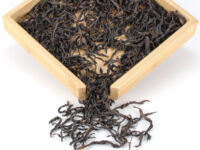
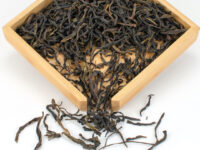
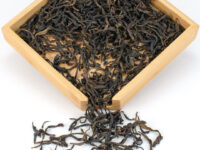
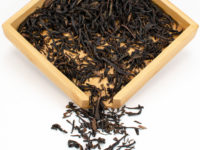
We now have over 60 varieties of fine Chinese tea, and even the most ardent Seven Cups fan probably hasn’t had the chance to try, or even read about, every one. So each month we feature three of our teas, giving you all a chance to learn more about these varieties. And what’s more, we have special discounts on all three – each and every month! For January, we have chosen one green tea, one black tea and one oolong…
|
|
|
What’s going on at the Seven Cups Tea House in Tucson, Arizona?
With Austin travelling right around China discovering new teas for the Seven Cups range, we’ve all been even busier than usual. Austin will be pleased to see that everything can run smoothly without him though!
We’ve just implemented a small price increase across our range of fine teas. We’ve actually been holding this off for a while now – we never want to raise any prices until we absolutely have to. As always, we stand by our promise on price, which is highlighted by Austin in our mission statement (see the full text in the September 2004 newsletter). Austin said:
“I’d like to mention our prices and how we establish them. Our prices are based on what we pay for the tea, not on the going rate for similar quality tea in the USA. I hate the idea that, just because our tea is selling cheaper, the price is a reflection on the quality. We know we are selling great tea. We know that there is a wide array of price and quality variations on the internet. We suspect that prices elsewhere are simply whatever the American market will bear. We may be forced to raise our prices if the prices in China go up, but if we can get our prices down in China, then we will pass that saving along to our customers.”