2009 Oolong Tea Tour Podcast-original Dan Chong tea bush
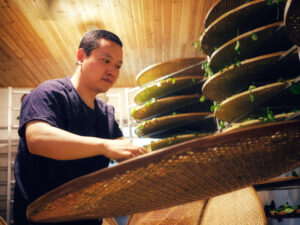
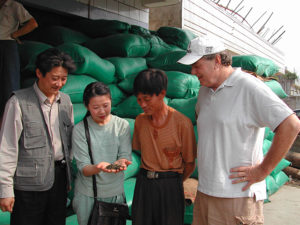
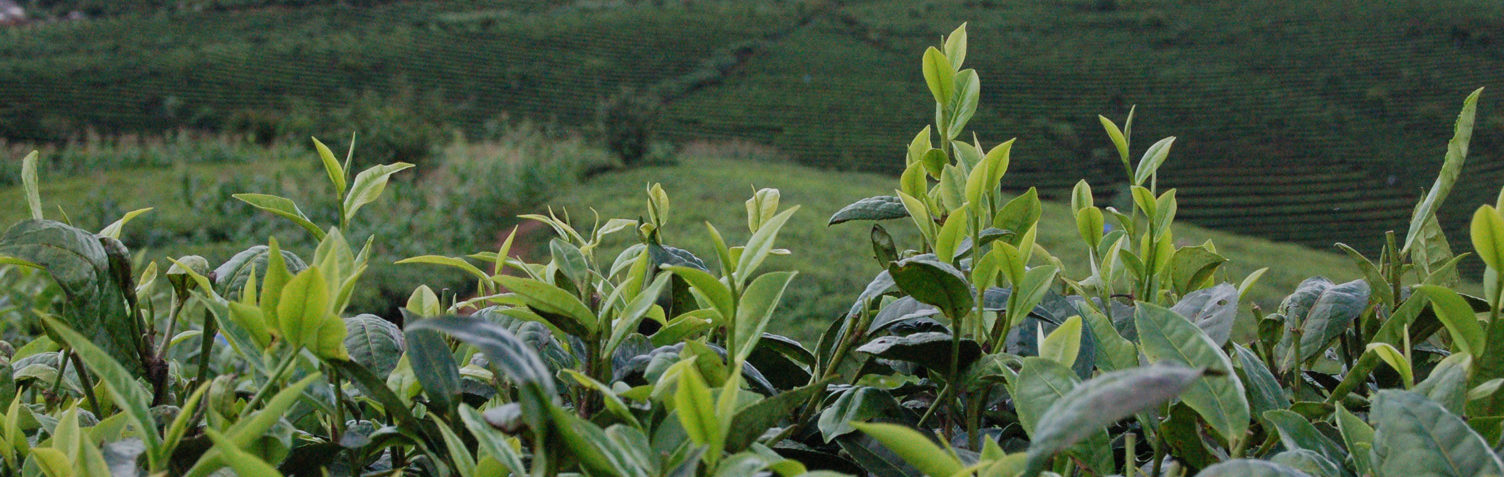
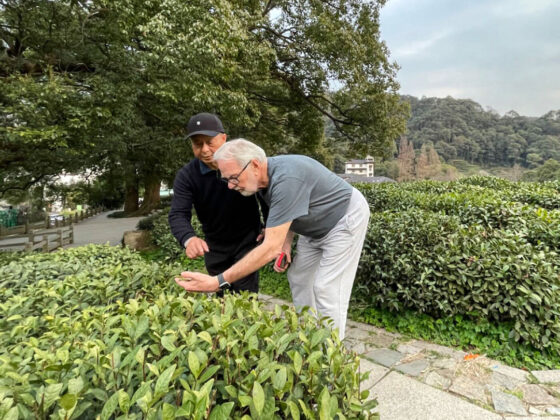
Welcome to our tea and tea culture video podcast with Zhuping Hodge, tea master and owner of Seven Cups and Andrea Serrano. This year Seven Cups launched three very successful tea tours to China. Many hours of video were taken and we want to share them with you. In this episode Zhuping guides the tour to Wu Dong Mountain the home of the original Dan Cong Oolong tea bush which is over 600 years old. While enjoying this video why not brew up your favorite Dan Cong Oolong tea. Enjoy!!!
Today’s topic: 2009 Oolong Tea Tour Videocast-original Dan Cong tea bush
Thank you all for your comments regarding our podcasts. We would like to create future podcasts on topics you all are interested in, so please contact us with ideas.
Comments:
Comment from Jason Witt | July 10th, 2009, 2:29 amWhat a piece of history! 600 years old. It’s interesting that the bush could grow that old by growing so slowly (1 cm per year) instead of producing more quickly but then dying young. Slow but steady wins the race, I guess. I didn’t know it was pronounced like Dan “Chong.” Good to know.
Comment from Herb Master | September 14th, 2009, 3:09 pmIt is good to know there are other people around that may have more than a little knowledge about Dan Cong. On the TeaChat forum we have been sharing amazement and disappointment over a debate between 2 other vendors, about the meaning of DanCong.
http://www.teachat.com/viewtopic.php?f=3&t=10814
The debate started when Roy Fong of Imperial Tea Court posted a blog entry bemoaning vendors who describe it as single bush, or single grove – stating it purely meant the Tea Bush was grown with a Single Trunk , and that anyone who sold a product labelled as Single Bush was misleading customers.
He went on to say it was not commercially possible to produce tea from a single tree.
http://camelliasinensisblog.blogspot.com/2009/09/clearing-up-common-mistake-what-dan.html
Imen from Tea Habitat has taken this as a personal attack on the integrity of her single bush offerings and has defended her position stoutly
http://tea-obsession.blogspot.com/2009/09/whos-mistaking.html
and followed this with several more posts.
So can I ask you, would you blend the leaves from this 600 year old bush with the leaves of other trees? or Blend leaves from any 200 or 300 year old trees?
Are any of your offerings single bush, single grove or are they all as per Roy Fong multi bush blends?
I have from you, Xue Lan Xiang, and Ye Fang which category do they fall under?
I would be interested in any comments that you have to add to Roy / Imen debate that would help clarify matters for us all.
Comment from austin | September 14th, 2009, 4:56 pmI’d just as soon stay out of the conflict. Both parties have made a worthy contribution to bringing Chinese tea to the US. Our Dan Cong oolong that you mentioned are not ’single bush’ teas. There is a lot of talk about ’single bush’ Dan Cong in Chaozhou. I can’t confirm or deny their existence, but the samples that I have tasted were very expensive. I do know that there is market for such teas amongst Chinese businessmen in Hong Kong and Guangzhou that like to show off their power and wealth. I have also heard of the tea from the original Da Hong Pao bushes being sold for a ridiculous price. I don’t know if that is true either.
We don’t blend any of our tea after we purchase it. If the producer has done so before we purchased it, they were clever enough blenders to fool us. We try to present what we think is a good example of a particular cultivator.
As a tea student I have found that there is always a lot to learn. There is a saying in Chinese that loosely translated says ‘you can study tea all of your life and not learn the names of all the tea.’ Getting good information about Chinese tea is extraordinarily hard. My friend, Yao Guo Kun, who was mentioned in the exchange, I think would agree. The people that try to discover the truth should be respected for the effort, and there should room for more study.
I did camp out back in 2001 on top of the mountain where the Song Dynasty bushes/trees are located. You can easily drive up the mountain these days, as you can see in Zhuping’s video. I had some savory chicken that night and I had some great tea, made by a local guy that lived up high on the mountain. I have no idea how many bushes were involved.
Comment from Herb Master | September 15th, 2009, 3:01 amThanks for your reply, I appreciate your diplomacy. It would be nice for the customers if some standardisation of nomenclature could be used by the more respected vendors.
With so many options available in these days of Internet shopping, it is difficult at times in one’s tea journey to know which vendor to choose for one’s next purchase.
If one has tried a DC and enjoyed it, then tried a DC from a second vendor and enjoyed it more (albeit paying a little more), then provision of greater detail of sourcing and manufacture can greatly assist in making future decisions over purchasing further everyday DCs and additional Special occasion DCs, especially when one’s existing vendors add new harvests and new lines, and one discovers new vendors also.
Comment from austin | September 16th, 2009, 9:14 amI appreciate you desire for clarity. It is amazing how quickly tea vendors on-line proliferate. I am currently writing a post about how people can become better consumers. I have found that people are becoming much more sophisticated about the questions they are asking vendors. Tea vendors in the US have a marginal knowledge of what is really going on in China, and looking for detailed answers to questions is the best way to sort things out. It is hard to source good tea, and it is hard to get good information. Most vendors create marketing that compensates for a lack of knowledge and some of the claims are easy enough to see through with some common sense. In the end the proof is in the tea, and it is not enough to have one or two good teas, a vendors catalog tells a good story. It is not always about the experience of the tea drinker either, because some tea require a more educated palate. The search for good tea is a reward in itself. Thanks for your comment

2009 Oolong Tea Tour Podcast-Making Rock Oolong pt3
2009 Oolong Tea Tour Podcast-Making Rock Oolong pt2
2009 Oolong Tea Tour Podcast-Making Rock Oolong pt1
2009 Oolong Tea Tour Podcast-Bai Ji Guan Rock Oolong
2009 Green Tea Tour-Anji Bai Cha
2009 Green Tea Tour Podcast-Purple Bamboo
2009 Oolong Tea Tour Podcast-Zhuni Teaware
2009 Oolong Tea Tour Podcast-original Dan Chong tea bush
Puer Tea Ceremony with Zhuping pt 3
Puer Tea Ceremony with Zhuping pt 2
Puer Tea Ceremony with Zhuping pt 1
Green Tea Ceremony- Gaiwan Podcast pt3
Green Tea Ceremony- Gaiwan Podcast pt2
Green Tea Ceremony- Gaiwan Podcast pt1
Congrats on Zhuping’s American Citizenship
Chinese Tea Ceremony with Zhuping Part 3 Video Podcast
Chinese Tea Ceremony with Zhuping Part 2 Video Podcast
Chinese Tea Ceremony with Zhuping Video Podcast
Chinese Tea Regions-Fujian Province Video Podcast
Chinese Tea Regions-Zhejiang Province

Please leave a comment: