About Puer Tea
How do they make it? Puer Tea Production Video Podcast
People enjoy and collect puer tea for three main reasons including enjoyment of the tea, overall health benefits and the investment potential. It became popular outside of the traditional markets of Tibet and Mongolia, where for many years
it was exchanged for horses, when it became sought after in Hong Kong for its health benefits, and for its mysterious quality of slow, natural fermentation, that causes it to improve with age. During the Cultural Revolution a lot of the old cakes were destroyed increasing the rareness of aged puer. In 1973, a process was invented to create fermented puer from 40 to 60 days.
Now puer has spread from Hong Kong and Guangzhou, to Taiwan, Beijing, Shanghai and within China. The popularity of puer has even started to spread to the US and Europe. All puer starts out the same. The basic ingredient is called mao cha. Mao cha is harvested and allowed to dry in the sun. Yunnan is the only province that grows tea that has a lot of
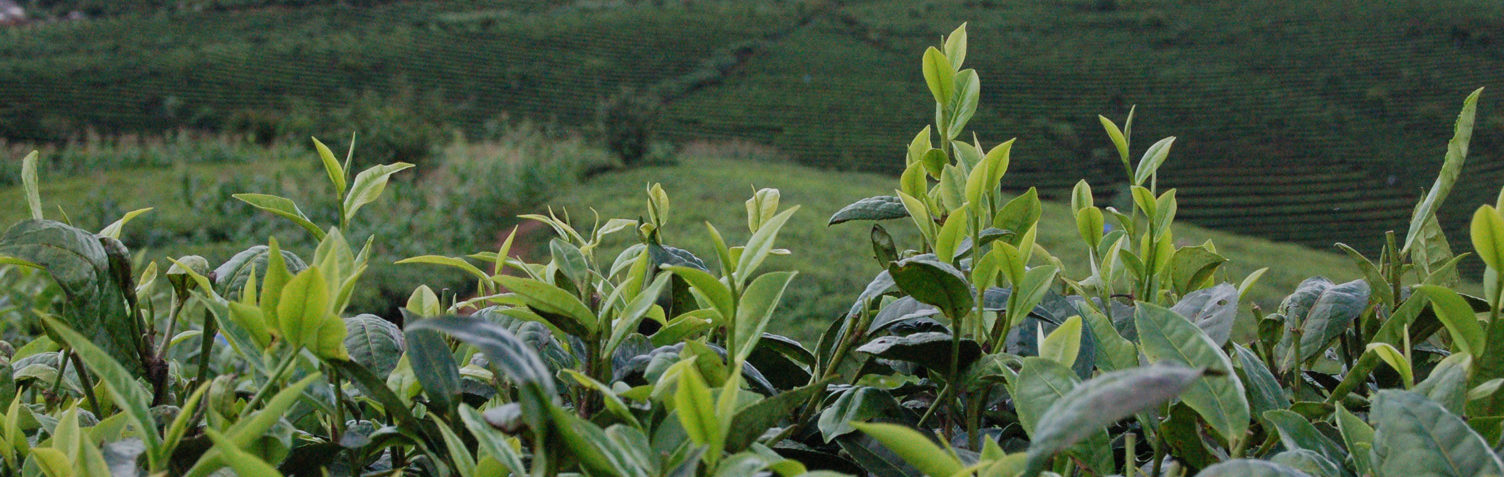
sunshine and blue skies in China. One of the side affects of all this sunshine is some very large leaf tea plants. All tea originated in Yunnan, but you might be surprised to know that the tea plants are called Camellia Sinesis Assamica. The reason is that when the British found the variety of tea growing in India they named it Assamica and believed that it was wild, but it had actually been planted along the old Silk Road that ran from Yunnan and Burma into Assam. Even though the origin issue has been cleared up, the ancient tea trees in Yunnan have kept the inaccurate name.
A lot of puer produced is said to be made from wild tea trees, but this is not the case. Wild tea trees are known to make people pretty sick sometimes, and what is called wild by puer makers is in fact old tea trees that have been cultivated, and are usually over a hundred years old. The age of the tree can be determined by measuring the trunk.
![]()
Of course the quality of the mao cha is an important factor in puer. The ideal mao cha is not oxidized and is two leaves and one bud. Farmers typically bring their mao cha to towns and villages where is purchased by local buyers and sorted and then purchased by puer producers. Although relatively large areas may be favorite places for certain producers to buy their mao cha, the cultivation is done by small farmers. Since puer has become more popular, many farmers are cutting their old trees to create bushes which have a better yield, so the number of old trees is decreasing every year. Most commercial puer is a blend of mao cha from different areas and there are some producers that will reveal the areas in Yunnan where the mao cha originated. These kinds of details enhance the value of the tea over time, and we try to supply this information whenever we can.
There are two general types of puer, cooked and raw. The raw or shen (green) puer is made from mao cha and steamed and pressed into cakes. It is the shen puer that demonstrates the miracle of puer. It slowly changes over time through a natural fermentation process. The microbes present in the mao cha that are not destroyed during sun drying work their magic and over 8 to 10 year raw is transformed to cooked, green to black. It is the shen that is most valuable over time and starts to reach is full maturity after around thirty years. Puer teas are elemental and mysteriously dark, fermented teas which are
robust, earthy, rich and grounding. Puer is often a favorite tea of the truly dedicated tea drinker. This aged tea usually begins with a variety of leaf from exceptionally broad-leaved tea trees. The more mature leaves are used to make a crude dark oolong tea. This tea either left loose or punched into cakes is then permitted to retain barely enough moisture content that the tea continues to ferment slowly over time. For this reason, puer is best stored open so that oxygen can continue to refine the tea. In understanding about grades, it is wrong to assume that the 1st grade is the best grade for puer. There is only an incidental correlation between the grade of the puer and the quality of an individual cake. For example, some of the most sought after tea is made from mao cha that is larger still than tenth grade tea. It is always a question of taste. Of course if a lot of expensive buds are used in a cake, it will drive the price up, even if it is not considered a good candidate for aging. So don’t be strictly guided by the grade, think also about the uniformity and tightness of compression and intelligent thinking about mao cha blends.