<?xml version="1.0"?><!-- generator="bbPress" -->

<rss version="2.0"
	xmlns:content="http://purl.org/rss/1.0/modules/content/"
	xmlns:dc="http://purl.org/dc/elements/1.1/"
>

<channel>
<title>Seven Cups Tea Forum Tag: Tea</title>
<link>http://www.sevencups.com/forum/</link>
<description>Seven Cups Tea Forum Tag: Tea</description>
<language>en</language>
<pubDate>Thu, 20 Nov 2008 10:37:59 +0000</pubDate>

<item>
<title>corrine on "zui chun hao jasmine tea"</title>
<link>http://www.sevencups.com/forum/topic/76#post-209</link>
<pubDate>Wed, 19 Nov 2008 20:44:43 +0000</pubDate>
<dc:creator>corrine</dc:creator>
<guid isPermaLink="false">209@http://www.sevencups.com/forum/</guid>
<description>&#60;p&#62;Company: Zui Chun Hao Jasmine Tea Co., LTD&#60;br /&#62;
Office Address: 7/F, Huaxia Industry Center, NO43, Tiyu Road, Xiamen, Fujian, China.&#60;br /&#62;
Telephone : eight six-zero five nine two—two six six three three nine six&#60;br /&#62;
Fax: eight six-zero five nine two—two six six three three nine seven&#60;br /&#62;
Site:http://www.chinajasminetea.com&#60;br /&#62;
Contact: Corrine Ke&#60;br /&#62;
Email: &#60;a href=&#34;mailto:sumgokxy@gmail.com&#34;&#62;sumgokxy@gmail.com&#60;/a&#62;   &#60;a href=&#34;mailto:Trade@mrentea.com&#34;&#62;Trade@mrentea.com&#60;/a&#62;&#60;br /&#62;
MSN: &#60;a href=&#34;mailto:sumgokxy@gmail.com&#34;&#62;sumgokxy@gmail.com&#60;/a&#62;&#60;/p&#62;
&#60;p&#62;Jasmine Tea (Also called Jasmine scented tea) is honored as the most fragrant and popular Chinese tea in the world. This tea is light, delicate, slightly sweet and every cup comes with a distinctive fresh jasmine fragrance. Jasmine tea is readily available in Chinese markets, and it can often be obtained from big grocery stores or specialty tea shops as well. Many people may be familiar with jasmine tea because it is a frequent offering at Chinese restaurants.&#60;/p&#62;
&#60;p&#62;The jasmine flowers are harvested during the day and stored in a cool place until night. During the night, the flowers bloom with full fragrance. The flowers are layered over the tea leaves during the scenting process. The quality of jasmine tea is determined by the quality of green tea used as its base and the effectiveness of the scenting.&#60;/p&#62;
&#60;p&#62;Zui Chun Hao Jasmine Tea is one of product lines by Xiamen Sumgo Tea Co. LTD that focus on Jasmine Tea manufacturing in Fuding, Fu’an, Ningde regions in Fujian provience from 1998. Now Zui Chun Hao is one of the major Jasmine Tea manufacturing in China with ten years development. To meet the international import requirements and food safety standards, we produce jasmine tea strictly based on the EU standard, Japan standard. All the pesticide residues meet the import requirements in the world. &#60;/p&#62;
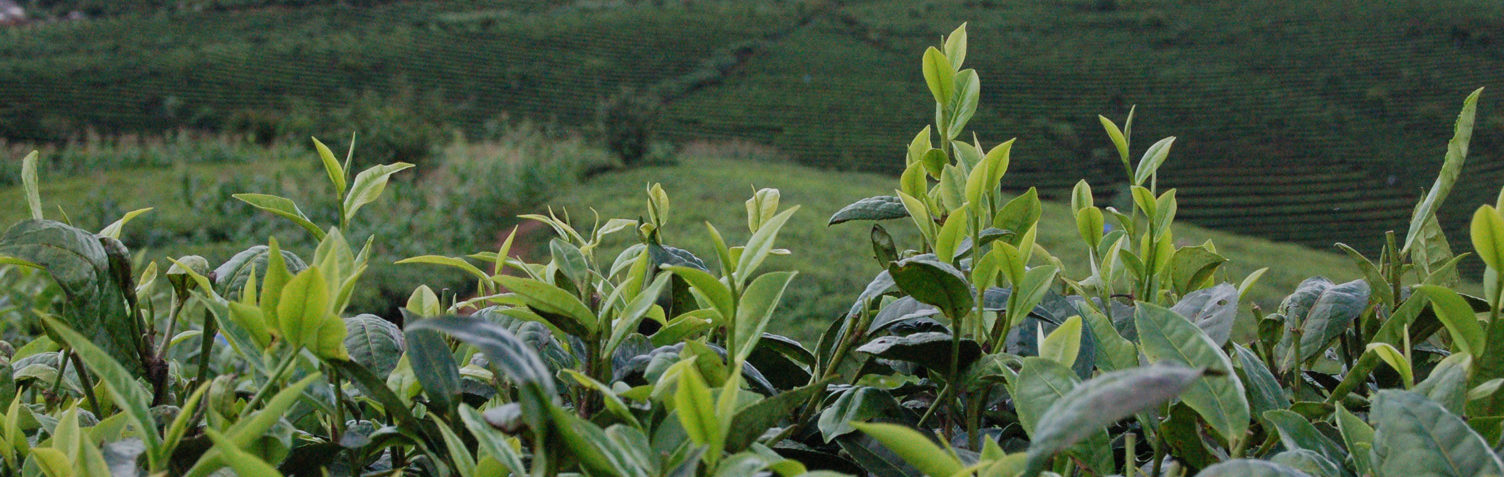
&#60;p&#62;Our jasmine tea garden is located at the high mountain which is more than 40kms away from the city. The garden has sufficient light ,great difference in temperature ,condign rainfall and fertile ground. It's fit to grow tea and the tea here has good quality and contains many efficient elements. Our jasmine tea has gained good reputation from our customers and our products are on sales to European countries, Japan, North Amercian regions, Australia and some other countries and regions.&#60;/p&#62;
&#60;p&#62;Besides the production, we also cooperate actively with colleges and tea research institutes to experiment and popularize new tea species.we work with Fujian University of Agriculture in order to study how to deal and process tea after harvest, and establish the standard quality system. We also engage in the experimental model base for the significant project.&#60;/p&#62;
&#60;p&#62;Following the principle of Quality and Credit rack first, Innovation stands company`s life. With the fair trade, we sincerely welcome more and more partners to work with us to develop a new field in the Tea Industry.
&#60;/p&#62;</description>
</item>
<item>
<title>fpfaff on "Stomach Reaction"</title>
<link>http://www.sevencups.com/forum/topic/36#post-134</link>
<pubDate>Wed, 09 Apr 2008 14:03:05 +0000</pubDate>
<dc:creator>fpfaff</dc:creator>
<guid isPermaLink="false">134@http://www.sevencups.com/forum/</guid>
<description>&#60;p&#62;I've bulked up my breakfast a bit and eliminated my morning snack (hobbit's second breakfast!), and that seems to be doing the trick.  So I'm sure you're right.&#60;/p&#62;
&#60;p&#62;Thanks, Austin, for your thoughts &#38;#38; kind words.&#60;/p&#62;
&#60;p&#62;     - Fred
&#60;/p&#62;</description>
</item>
<item>
<title>admin on "Stomach Reaction"</title>
<link>http://www.sevencups.com/forum/topic/36#post-133</link>
<pubDate>Wed, 09 Apr 2008 13:45:52 +0000</pubDate>
<dc:creator>admin</dc:creator>
<guid isPermaLink="false">133@http://www.sevencups.com/forum/</guid>
<description>&#60;p&#62;That does sound like a light breakfast compared to the amount of tea. The Chinese think that bananas are tough to digest.&#60;/p&#62;
&#60;p&#62;I think that some of the older bushes can create some strong tea, certainly, but there are also bushes that have gone wild in some places in those mountains, which can have some unanticipated affects on the stomach, according to the local people. I am talking about Dan Chongs not rock oolongs.&#60;/p&#62;
&#60;p&#62;My hunch is that it is more you breakfast than the tea. I hope you feel better.&#60;/p&#62;
&#60;p&#62;Austin
&#60;/p&#62;</description>
</item>
<item>
<title>fpfaff on "Stomach Reaction"</title>
<link>http://www.sevencups.com/forum/topic/36#post-132</link>
<pubDate>Tue, 08 Apr 2008 13:47:12 +0000</pubDate>
<dc:creator>fpfaff</dc:creator>
<guid isPermaLink="false">132@http://www.sevencups.com/forum/</guid>
<description>&#60;p&#62;I've been eating a very light breakfast -- banana, fruit, almonds.  I added some granola w/ milk to that mix this morning and felt much better.  The tea was Tie Luo Han.&#60;/p&#62;
&#60;p&#62;I think the other aspect is heat and volume.  It's actually 18 oz of hot tea I drink w/ breakfast (3 6oz gong fu pots) w/o milk.  That's a harsh wakeup call to the tummy.  I'm cooling the tea now by pouring it into a second, cool cup, and maybe I'll cut out the 3rd pot, but that would be unfortunate.&#60;/p&#62;
&#60;p&#62;I have to say, though, that aside from this stomach thing I feel much lighter and smoother than I did when drinking coffee.  There's something heavy about coffee that I came to dislike.&#60;/p&#62;
&#60;p&#62;You mention very old tea bushes.  I have to ask how that fits in -- interesting angle.&#60;/p&#62;
&#60;p&#62;Thanks very much for your response.&#60;/p&#62;
&#60;p&#62;      - FP
&#60;/p&#62;</description>
</item>
<item>
<title>admin on "Stomach Reaction"</title>
<link>http://www.sevencups.com/forum/topic/36#post-131</link>
<pubDate>Tue, 08 Apr 2008 11:44:50 +0000</pubDate>
<dc:creator>admin</dc:creator>
<guid isPermaLink="false">131@http://www.sevencups.com/forum/</guid>
<description>&#60;p&#62;The general guidelines according to Chinese medicine is the more oxidized the tea the better for digestion. I think that the majority of complains about stomach issues usually come from drinking too much green tea. &#60;/p&#62;
&#60;p&#62;For me personally I like to drink green teas in the morning and then switch to oolongs, black tea, or puer as the days goes on and I need more help with digestion. My stomach is usually pretty good in the morning. For an acidic stomach puer is certainly the best.&#60;/p&#62;
&#60;p&#62;Dan Cong Oolong is pretty strong tea, a lot coming some very old tea bushes. The Chao Zhou people are big eaters, and probably most don't eat a small breakfast. I wonder what you are eating?&#60;/p&#62;
&#60;p&#62;Austin
&#60;/p&#62;</description>
</item>
<item>
<title>fpfaff on "Stomach Reaction"</title>
<link>http://www.sevencups.com/forum/topic/36#post-130</link>
<pubDate>Mon, 07 Apr 2008 09:41:28 +0000</pubDate>
<dc:creator>fpfaff</dc:creator>
<guid isPermaLink="false">130@http://www.sevencups.com/forum/</guid>
<description>&#60;p&#62;The Shui Jin Gui &#38;#38; Dan Cong oolongs seem to give me the most trouble.  Tie Guan Yin has little effect, strangely.  You mention astringency -- does that mean that tannins cause the problem?  How?  Is it the alkalinity itself that prompts excessive stomach acid producton?&#60;br /&#62;
  I drank a lot of black tea this past Saturday and had little trouble, but I love the oolongs.  Maybe I'll have a strictly dark oolong week and see what happens.&#60;br /&#62;
   Thanks for you response, Kerne.&#60;/p&#62;
&#60;p&#62;        - FP
&#60;/p&#62;</description>
</item>
<item>
<title>kerne on "Stomach Reaction"</title>
<link>http://www.sevencups.com/forum/topic/36#post-129</link>
<pubDate>Mon, 07 Apr 2008 09:00:11 +0000</pubDate>
<dc:creator>kerne</dc:creator>
<guid isPermaLink="false">129@http://www.sevencups.com/forum/</guid>
<description>&#60;p&#62;Teas (but not all tisanes/herbals) are actually a little alkaline.  That along with the astringency of greener preparations can cause GI upset.  You didn't say what kind of oolong you've been drinking, but I'd guess it's a lighter roast/oxidized one.&#60;/p&#62;
&#60;p&#62;If green teas and lighter roast oolongs tend bother your stomach, stick to higer roasted oolongs and black/red teas.  And of course, never drink tea on an empty stomach which you said you don't.  I would stick to foods with a neutral pH (non-acidic) with your morning tea.  Few common foods are significantly alkaline.
&#60;/p&#62;</description>
</item>
<item>
<title>fpfaff on "Stomach Reaction"</title>
<link>http://www.sevencups.com/forum/topic/36#post-128</link>
<pubDate>Mon, 07 Apr 2008 08:25:00 +0000</pubDate>
<dc:creator>fpfaff</dc:creator>
<guid isPermaLink="false">128@http://www.sevencups.com/forum/</guid>
<description>&#60;p&#62;It's been 6 or 7 weeks now since I switched from coffee to oolong tea, drinking about 12 ounces with breakfast, then little to none through the rest of the day.  I noticed right away that my stomach felt very acidic an hour or so after breakfast, but I figured it would just take a while to adjust to the difference.  It hasn't though.  When I get that level of heartburn I must either eat something or gobble antacid tablets.  Of the two, I generally choose the food option, so that by now, believe it or not, I've gained about 3-4 lbs since switching to tea!  Believe me, I don't need extra weight.  Aside from this, though, I feel much better with tea than I did with coffee.&#60;br /&#62;
   Does this strike a cord w/ anyone?  Does oolong tea cause this effect more than, say, black tea?  Any remedies?&#60;br /&#62;
   I'm going to try drinking a bit of milk before the tea to see if that helps, but I'd be very grateful for any thoughts, advice or suggestions.&#60;/p&#62;
&#60;p&#62;      - Fred Pfaff
&#60;/p&#62;</description>
</item>
<item>
<title>admin on "the weakening dollar."</title>
<link>http://www.sevencups.com/forum/topic/29#post-125</link>
<pubDate>Sat, 08 Mar 2008 18:59:16 +0000</pubDate>
<dc:creator>admin</dc:creator>
<guid isPermaLink="false">125@http://www.sevencups.com/forum/</guid>
<description>&#60;p&#62;Hi Fred&#60;br /&#62;
You were not being presumptuous at all, I hope my answers are not making feel defensive. I appreciate your thoughts.&#60;br /&#62;
Austin
&#60;/p&#62;</description>
</item>
<item>
<title>fpfaff on "the weakening dollar."</title>
<link>http://www.sevencups.com/forum/topic/29#post-124</link>
<pubDate>Sat, 08 Mar 2008 15:17:04 +0000</pubDate>
<dc:creator>fpfaff</dc:creator>
<guid isPermaLink="false">124@http://www.sevencups.com/forum/</guid>
<description>&#60;p&#62;Hi Austin,&#60;br /&#62;
    Well one thing's for sure, the quality certainly speaks for itself.  Please excuse me if I was presumptuous, I guess I became overstimulated.&#60;/p&#62;
&#60;p&#62;    - Fred
&#60;/p&#62;</description>
</item>
<item>
<title>admin on "the weakening dollar."</title>
<link>http://www.sevencups.com/forum/topic/29#post-123</link>
<pubDate>Sat, 08 Mar 2008 11:42:29 +0000</pubDate>
<dc:creator>admin</dc:creator>
<guid isPermaLink="false">123@http://www.sevencups.com/forum/</guid>
<description>&#60;p&#62;Hi Fred&#60;br /&#62;
This is exactly our model. Since you mentioned South America I just wanted to mention that the US imports more tea from Argentina than any other country by a very large margin. It not not well known that most of the commercial tea available in the traditional international market comes from South America and Africa. There is almost no handmade tea produced outside of China, even Japanese tea relies heavily on machine based production.&#60;/p&#62;
&#60;p&#62;Marketing artisanal teas is difficult in America because the difference in price between these kind of tea and the commercial grades of tea is a lot more that a couple of dollars, even at the source, and the Chinese market is a lot better because they know this kind of tea and are happy to pay for it if they are lucky enough to find some, theis level of tea not being available on the open market. That is why we are opening a tea house in China this year, and addressing the gift market there. We did a price survey across China this year, and all of the prices there are higher that we can charge here. We don't need to work so hard on educating people in China or Asia for that matter in order to sell our tea.&#60;/p&#62;
&#60;p&#62;We are glad to have you as a customer. We are sorry that you had to work so hard to find us. We are a small company and chose some time ago to let our tea speak for us and depend on work of mouth marketing. We have rather devoted customers in 35 different countries. We haven't spend a lot on market but instead have invested heavily in providing information online, and developing our sources. We are also better known in tea circles in China than here, and I will be published this year in the Chinese Tea Culture Institutes Journal, for which I feel very honored.&#60;/p&#62;
&#60;p&#62;We are also hoping over time to help promote the expansion of the market for tradition tea making. It is a remarkable cultural agricultural treasure, requiring a skill level that often surpassed wine making, and very often can be very costly. We hope that other Westerners discover this kind of tea. The English did such a good job at turning tea into a commodity, that it will take a while to undo.&#60;/p&#62;
&#60;p&#62;Austin
&#60;/p&#62;</description>
</item>
<item>
<title>fpfaff on "the weakening dollar."</title>
<link>http://www.sevencups.com/forum/topic/29#post-122</link>
<pubDate>Fri, 07 Mar 2008 15:20:59 +0000</pubDate>
<dc:creator>fpfaff</dc:creator>
<guid isPermaLink="false">122@http://www.sevencups.com/forum/</guid>
<description>&#60;p&#62;I just quit coffee for various reasons and am now very interested in the artisanal teas Seven Cups sell.  Some of the things I learned from the coffee world may be relevant to this discussion thread.&#60;br /&#62;
  There is a movement in the US that is gaining momentum for artisanal coffees.  Peet's started this, and there are now a dozen or so businesses that sell artisanal coffee.  Their business model is to travel to the coffee farms, develop relationships with the owners, and pay 2 or more times the usual going rate for coffee grown and made under strictly controlled conditions.  Farmers who do this soon learn they can make a lot more money by emphasizing quality over quantity, plus their workers get paid more and are happier with their lot in life.&#60;br /&#62;
  I'm sure China is different from Latin America in many ways, but the relevence here I think is in the marketing within the US.  The success of these businesses, and many others, is proof of people's willingness to pay more for something exceptional.  The challenge is to communicate the product and its qualities to potential consumers.&#60;br /&#62;
  No I'm not a marketing guy -- I'm a chemist, actually -- but it took me a while to discover Seven Cups.  A Google search for Chinese tea brought up Seven Cups on the fourth page of search result listings.  Most people would stop at page 1 or 2.&#60;br /&#62;
  I think there's a real market for your product, and now that I've discovered you I definitely want to see you succeed.  Maybe there's a way to slipstream behind some of the market penetration the artisanal coffee folks have made.&#60;br /&#62;
  Just a thought, well intentioned.&#60;/p&#62;
&#60;p&#62;      - Fred
&#60;/p&#62;</description>
</item>
<item>
<title>admin on "the weakening dollar."</title>
<link>http://www.sevencups.com/forum/topic/29#post-95</link>
<pubDate>Sun, 11 Nov 2007 08:41:24 +0000</pubDate>
<dc:creator>admin</dc:creator>
<guid isPermaLink="false">95@http://www.sevencups.com/forum/</guid>
<description>&#60;p&#62;Hi John&#60;br /&#62;
I appreciate your interest. Our biggest cost which really doesn't get factored in is the money we spend searching out these teas. It is not enough to just go once and then you have a source for life. Conditions change rapidly inside of China, and Chinese culture is a relational culture. Relationship need to be maintained over time, and that only happens face to face. That is complicated by the the privatization that is happening in the countryside, the growing economy, the increase in disposable income within the middle class. I didn't buy any puer last year because of the spike in prices because of the expansion of puer buying inside of China. The price would have been too high for American consumers. This spring we plan to start selling tea inside of China ourselves because our quality is competitive and the retail prices there are higher than what we can sell here. It is hard to find the quality of tea that we carry, and Americans and Europeans haven't the experience to recognize it. I China we don't have to educate people, and this level of quality is not openly available on the market except for government buyers. &#60;/p&#62;
&#60;p&#62;It's hard to be profitable in a chaotic market. The business model set up by the East India Company, which is the prevailing model in the international tea business is slowing collapsing. That model is based on cheap labor, quantity over quality, and deceptive marketing. All of the existing distribution channels or locked into that model, and are not supportive of a level of quality that is not produced within that model. Chinese tea is very maligned in the international market for that reason. It is not the industry that promotes better quality tea, but the demands of consumers that have been educated, and sometimes poorly, through the internet. It is information that makes the difference.&#60;/p&#62;
&#60;p&#62;For us, we believe that if we can maintain our levels of quality, and not buckle under to the market pressure to compromise our quality for a price advantage, we will survive over time. It's a hard way to do business but we think that is the way to navigate through the chaos.&#60;/p&#62;
&#60;p&#62;Tea is really the first global industry, and it is an interesting industry to watch as the global economy struggles against the old imperial global forces to find sustainable business models. We hope that we can add a small piece to that process.&#60;/p&#62;
&#60;p&#62;Austin
&#60;/p&#62;</description>
</item>
<item>
<title>johnemiba on "the weakening dollar."</title>
<link>http://www.sevencups.com/forum/topic/29#post-94</link>
<pubDate>Sun, 11 Nov 2007 07:44:47 +0000</pubDate>
<dc:creator>johnemiba</dc:creator>
<guid isPermaLink="false">94@http://www.sevencups.com/forum/</guid>
<description>&#60;p&#62;Constructive whining is always a good thing. You're welcome and thanks.  I'm fascinated by the commercial side of the tea industry and outside factors.
&#60;/p&#62;</description>
</item>
<item>
<title>admin on "the weakening dollar."</title>
<link>http://www.sevencups.com/forum/topic/29#post-93</link>
<pubDate>Sat, 10 Nov 2007 21:45:13 +0000</pubDate>
<dc:creator>admin</dc:creator>
<guid isPermaLink="false">93@http://www.sevencups.com/forum/</guid>
<description>&#60;p&#62;Sure it affects us, as does the rising cost of shipping, the competition within China for high end tea, the lack of knowledge of quality and price in the US, the tea suppliers though various means are able to circumvent the FDA and the Chinese exports testing and that costs that coincide with that process, all of the deceptive marketing in the tea industry, and the focus in the industry in price over quality. It the long run, we will keep at it. Thanks for a question that gives me the chance to whine.&#60;br /&#62;
Austin
&#60;/p&#62;</description>
</item>
<item>
<title>johnemiba on "the weakening dollar."</title>
<link>http://www.sevencups.com/forum/topic/29#post-91</link>
<pubDate>Sat, 10 Nov 2007 11:08:59 +0000</pubDate>
<dc:creator>johnemiba</dc:creator>
<guid isPermaLink="false">91@http://www.sevencups.com/forum/</guid>
<description>&#60;p&#62;Hello,&#60;br /&#62;
With the value of the U.S. dollar dropping, I was wondering if that has had any impact on buying tea. &#60;/p&#62;
&#60;p&#62;Thanks,&#60;br /&#62;
~John
&#60;/p&#62;</description>
</item>
<item>
<title>admin on "Gyokuro"</title>
<link>http://www.sevencups.com/forum/topic/26#post-81</link>
<pubDate>Thu, 11 Oct 2007 21:13:01 +0000</pubDate>
<dc:creator>admin</dc:creator>
<guid isPermaLink="false">81@http://www.sevencups.com/forum/</guid>
<description>&#60;p&#62;John and Elisa...nice to have your friendship!&#60;br /&#62;
Austin
&#60;/p&#62;</description>
</item>
<item>
<title>lakewaves222 on "Gyokuro"</title>
<link>http://www.sevencups.com/forum/topic/26#post-80</link>
<pubDate>Wed, 10 Oct 2007 20:55:55 +0000</pubDate>
<dc:creator>lakewaves222</dc:creator>
<guid isPermaLink="false">80@http://www.sevencups.com/forum/</guid>
<description>&#60;p&#62;Your answer to both questions is so interesting. thanks for your reply. Keep up the great work of bringing great teas to the Americas. Your friends John and Elisa
&#60;/p&#62;</description>
</item>
<item>
<title>admin on "Gyokuro"</title>
<link>http://www.sevencups.com/forum/topic/26#post-78</link>
<pubDate>Tue, 09 Oct 2007 14:08:11 +0000</pubDate>
<dc:creator>admin</dc:creator>
<guid isPermaLink="false">78@http://www.sevencups.com/forum/</guid>
<description>&#60;p&#62;Yes, I did run across a Gyokuro that was being produced in Yunnan, and there are probably more, although I haven't really looked. These are all machine produced tea, and can not compare with the Gyokuro produced in Japan. The Japanese made contracts with a lot of Chinese producers to use their machinery to make Japanese 'style' green tea, which was in turn sold in Japan and exported from Japan as Japanese tea. Now the Japanese machinery has moved to Africa were costs are even lower. There was a lot of conflict about this last year in Kenya. We have this sencha because it is produced by the first company in Chinese to have received international organic certification, and we have carried it for many years. &#60;/p&#62;
&#60;p&#62;There is tea being grown in South Carolina and Hawaii. It has yet to distinguish itself.&#60;/p&#62;
&#60;p&#62;More than 50% to 60% of all tea imported into the US comes from South America, and a similar percentage of tea imported into Europe comes from Africa. This is not a fact that is highlighted by the international tea business for obvious reasons.
&#60;/p&#62;</description>
</item>
<item>
<title>lakewaves222 on "Gyokuro"</title>
<link>http://www.sevencups.com/forum/topic/26#post-76</link>
<pubDate>Mon, 08 Oct 2007 07:02:48 +0000</pubDate>
<dc:creator>lakewaves222</dc:creator>
<guid isPermaLink="false">76@http://www.sevencups.com/forum/</guid>
<description>&#60;p&#62;I see that you have a Sencha tea. So I was wondering if you may have or know of a Gyokuro , from China? I would also like to find out if there is any Tea grown in North America or for that matter inSouth America as well? I would certainly think that would be possible, as we are pretty much in the same latitudes and have the older mountain ranges (Appalachian range), where there would be more soil development in the eastern part of the USA. I have looked on the net but have'nt come up with any info. So I thought maybe you may know .
&#60;/p&#62;</description>
</item>
<item>
<title>admin on "Puerh"</title>
<link>http://www.sevencups.com/forum/topic/22#post-70</link>
<pubDate>Sun, 01 Jul 2007 20:01:36 +0000</pubDate>
<dc:creator>admin</dc:creator>
<guid isPermaLink="false">70@http://www.sevencups.com/forum/</guid>
<description>&#60;p&#62;Sorry it has taken me so long to respond. I am in China and don't always have internet access. Puer is not sweetened by most puer drinkers. I think, however, if you like it, what's the harm?&#60;br /&#62;
Austin
&#60;/p&#62;</description>
</item>
<item>
<title>zurn695 on "Puerh"</title>
<link>http://www.sevencups.com/forum/topic/22#post-69</link>
<pubDate>Wed, 13 Jun 2007 10:12:35 +0000</pubDate>
<dc:creator>zurn695</dc:creator>
<guid isPermaLink="false">69@http://www.sevencups.com/forum/</guid>
<description>&#60;p&#62;I'm new to puerh&#60;br /&#62;
If there are any drikers of this tea&#60;br /&#62;
I have been on other forums and have not seen or heard of drinkers adding sweetners to thier tea&#60;br /&#62;
For me I use honey and have tried it without in some of the more mellow puerh's but still enjoy it with honey&#60;br /&#62;
I was wondering if this is considered a no non by some&#60;br /&#62;
either way I like it sweetened
&#60;/p&#62;</description>
</item>
<item>
<title>tmaynard on "Optimal Tea Storage"</title>
<link>http://www.sevencups.com/forum/topic/20#post-67</link>
<pubDate>Mon, 16 Apr 2007 09:36:02 +0000</pubDate>
<dc:creator>tmaynard</dc:creator>
<guid isPermaLink="false">67@http://www.sevencups.com/forum/</guid>
<description>&#60;p&#62;Well, you answered my question: you do break down large quantities into smaller lots, even though the scale is different.&#60;/p&#62;
&#60;p&#62;I am not a heavy tea drinker, but I do brew several infusions of one tea every day -- using only about 5 grams of tea daily.  At that rate, 100g of tea yields me 40-60 largish mugs of tea ... or about a month's worth or more.&#60;/p&#62;
&#60;p&#62;If I drank only one tea I suppose I shouldn't worry, but I have several favorites and I rotate them so each 100g pack actually lasts for 3-4 months (possibly longer), hence my question.&#60;/p&#62;
&#60;p&#62;Thanks for your help!&#60;br /&#62;
Tom.
&#60;/p&#62;</description>
</item>
<item>
<title>admin on "Optimal Tea Storage"</title>
<link>http://www.sevencups.com/forum/topic/20#post-66</link>
<pubDate>Sun, 15 Apr 2007 12:16:25 +0000</pubDate>
<dc:creator>admin</dc:creator>
<guid isPermaLink="false">66@http://www.sevencups.com/forum/</guid>
<description>&#60;p&#62;For me 100 grams of tea isn't very much in relationship to how much I drink, so I don't worry to much about it getting stale before I drink it all. I do, however, have some caddies that I use for storing tea. I personally don't separate my tea into smaller amounts, but I drink a lot of tea. I also live in an area where the humidity is low. Humidity may be more of a problem then just exposure to air in terms of rapid loss of freshness. I do store my tea in a sealed container. At our warehouse we do break the tea into smaller quantities, 250 grams or 500 gram amounts, depending on the volitilaty of the tea. We also keep the temperature low, but not too low. Good packing and storing under good conditions can extend the shelve life of tea considerably. We are very careful with our tea which is not the standard in the industry. The general rules are to keep it out of the air, away from smells and humidity, and in the dark. &#60;/p&#62;
&#60;p&#62;People's understanding about freshness is sometimes incorrect. For example, everyone looks for tea as close to harvest time the better, which is a largely a myth. Green tea for example has a wonderful smell right after it has been produced, but the best taste comes after it has aged for a few months. It is a good idea to consider the tea you are storing. Puer for example needs to be stored in a place that has good air flow. As in most questions about tea, there are general guidelines, and complications with specific teas. &#60;/p&#62;
&#60;p&#62;I can tell you that the Chines are experimenting at extending shelf life all the time, trying to improve their storage techniques, while the tea producers outside of China do not take as much care. It is common to see tea stored in the same kind of bags that are used to store other commodities that are not sealed to either smell, humidity, or air.&#60;/p&#62;
&#60;p&#62;Austin
&#60;/p&#62;</description>
</item>
<item>
<title>tmaynard on "Optimal Tea Storage"</title>
<link>http://www.sevencups.com/forum/topic/20#post-65</link>
<pubDate>Fri, 13 Apr 2007 11:07:54 +0000</pubDate>
<dc:creator>tmaynard</dc:creator>
<guid isPermaLink="false">65@http://www.sevencups.com/forum/</guid>
<description>&#60;p&#62;I read somewhere that if you have a large quantity of tea, say a 100g foil pouch, that you should separate a small quantity for use and reseal the large amount for storage.&#60;/p&#62;
&#60;p&#62;The idea is that frequent opening of the large container exposes all the tea to air, causing it to stale.&#60;/p&#62;
&#60;p&#62;If that is true then what about storing all the tea in small amounts?  I have a number of tins, each of which holds about 35g of tea.  Would it make sense to divide the large amount into full, smaller tins -- each of which would only be opened as the previous tin went empty?&#60;/p&#62;
&#60;p&#62;It seems to me that the bulk of the tea would only be exposed to air once (at the time of division into smaller tins) and thus should retain its freshness.&#60;/p&#62;
&#60;p&#62;How do you store your tea?
&#60;/p&#62;</description>
</item>
<item>
<title>admin on "Tea"</title>
<link>http://www.sevencups.com/forum/topic/1#post-1</link>
<pubDate>Thu, 01 Feb 2007 19:04:16 +0000</pubDate>
<dc:creator>admin</dc:creator>
<guid isPermaLink="false">1@http://www.sevencups.com/forum/</guid>
<description>&#60;p&#62;First Post!  This forum will grow over time.
&#60;/p&#62;</description>
</item>

</channel>
</rss>