Heirloom Cultivars: From Tomatoes to Tea
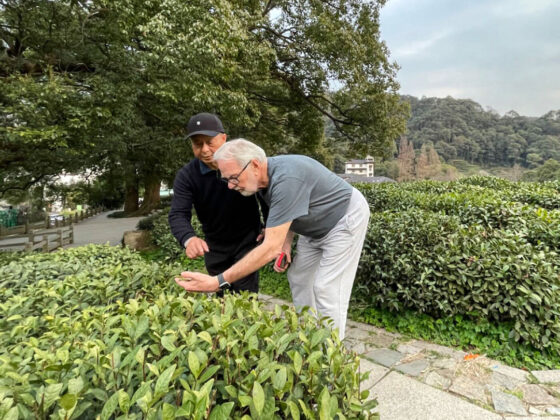
All my life, whenever I’ve had a little patch of dirt available to me, I’ve been a gardener. If somebody ever asks me why I have a garden, I’ll tell them it is to grow tomatoes. As I’ve learned more about tomatoes, I’ve discovered types of tomatoes that you can’t buy in the store because… // MORE
By Austin Hodge, on October 30, 2024 in: Seven Cups News
In Tong Mu Village, high up in the Wuyi Mountain range, Wu Jianming is weeding his tea garden. We know this because we called his wife and she told us he’d be gone all week with his hands in the dirt. It’s the seventh Lunar month of the old agricultural calendar, there. In Tucson, it’s… // MORE
By Austin Hodge, on August 22, 2024 in: Seven Cups News
My first experience with puer tea came in an alley outside the Victoria Hotel on Shamian Island surrounded by the Pearl River in Guangzhou China on a fall morning in 2002. I had just registered my business in Tucson, Arizona and was in Guangzhou looking for tea. I was having dim sum. I was… // MORE
By Austin Hodge, on January 4, 2024 in: Seven Cups News