| END OF YEAR SALE 25%OFF OFFER AVAILABLE WHILE SUPPLY LASTS
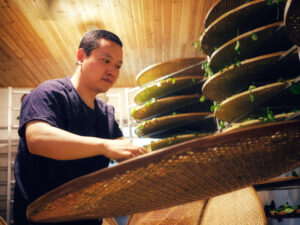
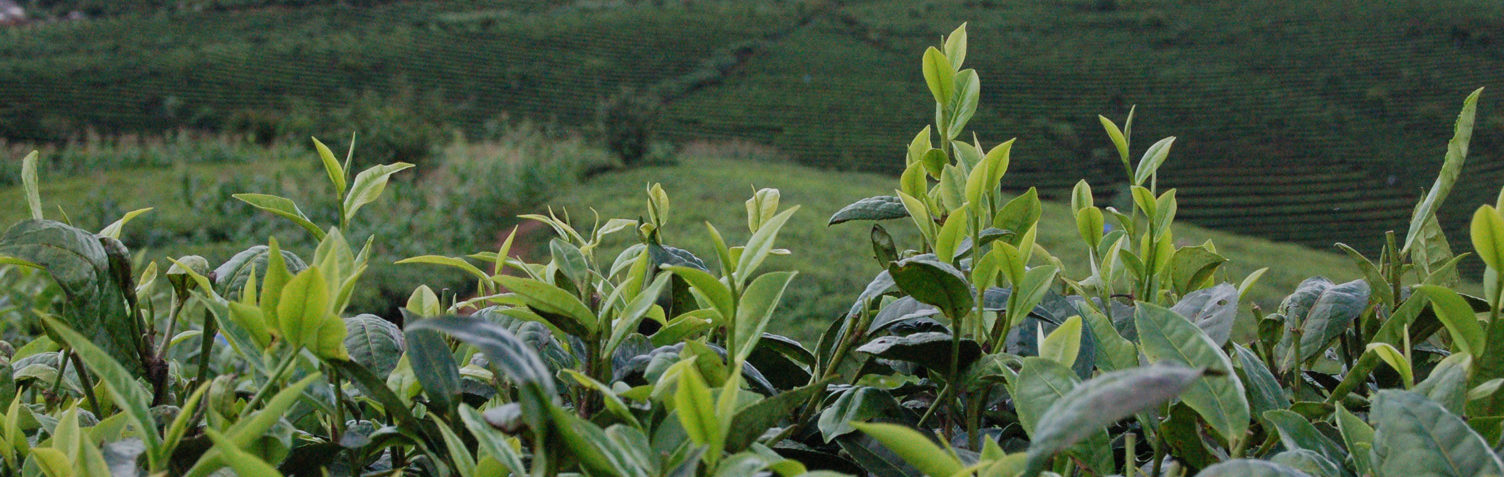
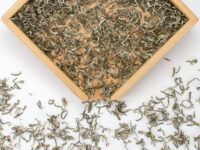
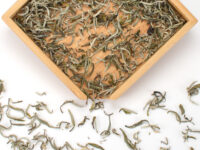
The name of the local tea bush in Fujian is Feng Huang Shui Xian. It grows on Wu Yi Mountain, which is cloudier and more humid than the bush’s original home on Phoenix Mountain in Chaozhou, which is in Guangdong province. Both Fujian and Guangdong are near the ocean in Southern China. Chaozhou, the home of Dan Cong teas, borders Fujian and is famous for its “Gong Fu Cha” history. Gong Fu Cha is a practice that involves taking time to enjoy and experience tea. This type of tea bush can have many long branches, producing a high yield. They are considered “wild” bushes because they are grown from seed and not cultivated from cuttings like many other tea bushes. These “wild” bushes can grow to be very large and tall with a wide canopy like a tree. This is why the tea bushes are sometimes called “Ban Qiao Mou,” which means it has a character that is half bush, half tree. It’s larger than a tea bush, but smaller than a tea tree. In fact, bushes grown on the sunnier Phoenix Mountain can have leaves as large as a man’s hand. These leaves are also very thick, for these reasons this bush is used almost exclusively to make wulong tea. The producers know that if they tried to make a different type of tea, such as green tea, the tea would be too strong and bitter because of the size and thickness of the leaves. Tea bushes are extremely sensitive to their environment and climate. When the Feng Huang bushes were moved from Guangdong to their new home in Fujian, the tea made from the bushes took on a new, different character. Differences in the mineral content of the soil and water on Wu Yi Shan reduced the bitterness of the bushes, managing to create smoother liquor while sustaining its high aroma. This character is good for both wulong and black tea. The producers of this tea knew that the high elevation and humidity of this area would bring a sweeter character to this tea, providing a more smooth flavor for new rock wulong drinkers, who may be put off by the rich, roasted flavor of most rock wulongs. The other reason to grow this tea in Wu Yi Shan was to offer the first certified organic Dan Cong Wulong. Though many teas grown in Guangdong are grown organically, most are not certified, making this wulong the first certified organic Dan Cong Wulong. Feng Huang Shui Xian is also nicknamed “Niao Zui Cha,” which means “Bird’s Beak Tea.” The finished leaf has a curve resembling the hook of an eagle’s beak. The local people believe the original tea seeds came from a beautiful, colorful bird called Feng Huang. It dropped them on the mountain to grow, because the gods knew the Song Dynasty Emperors would see the beauty on the mountainside. The leaves are picked in early April, and never on a rainy day. They are fully formed and separated, and are not picked as buds. After harvesting, the tea is withered for a few hours in the sun on bamboo trays. It is then brought inside to oxidize naturally, again on bamboo trays, for 12-16 hours depending upon the weather. During this period, the trays are shaken periodically to twist the leaves and allow juice to be released. Shaking gently breaks down cell walls causing red edges on the finished leaf. When the tea master smells the leaves and determines oxidation is complete, the oxidation process is halted through heating. A heated machine will roll the leaves for 7-10 minutes to stop enzymatic oxidation. Then the leaves will be kneaded, giving them their characteristic long, twisted shape. They will be dried at a high temperature for 30 minutes, followed by a cooler temperature for about 4 hours. No charcoal is used, so as to not cover up the natural aroma of the tea. This tea’s leaves can be infused many times, with less bitterness than other Dan Cong teas. The dried leaves are brownish with yellow tones, but when brewed, golden tones and red highlights appear. The tea liquor has a high sheen, with a rich aroma that immediately attracts you and lingers. This organic tea produces a bright yellow tea color, with a red edge to the softening leaves. This tea has a rich taste, and whole mouth feel.
Location: Wu Yi Mountain City, Fujiang Province |