Puer teas are elemental and mysteriously dark, fermented teas which are robust, earthy, rich and grounding. Puer is often a favorite tea of the truly dedicated tea drinker. This aged tea usually begins with a variety of leaf from exceptionally broad-leaved tea trees. This tea either left loose or compressed into cakes is then permitted to retain barely enough moisture content that the tea continues to ferment slowly over time. For this reason, puer is best stored open so that oxygen can continue to refine the tea.
There are two general types of puer: Shu (black, or cooked) and Sheng (green, or raw). The raw or Sheng (green) puer is made from mao cha this is lightly steamed and pressed into cakes. It is the sheng puer that demonstrates the miracle of puer. The microbes present in the mao cha that are not destroyed during sun drying work their magic and over 8 to 10 years until raw puer tea is transformed to cooked, green to black. It is the sheng that is most valuable over time and starts to reach is full maturity after around thirty years.
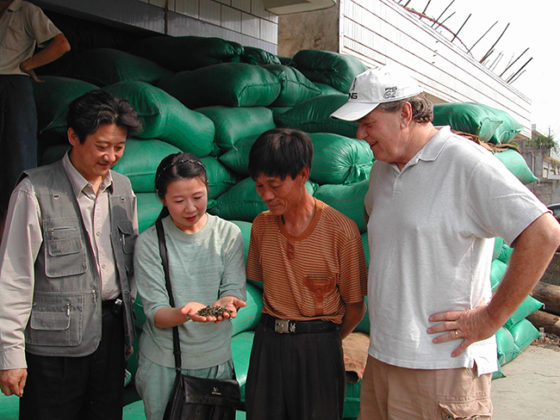
Shu, or cooked/black puer is more complicated. In 1973, because of a shortage of old cakes caused by the destruction of all things old during the Cultural Revolution, a process was developed for uniformly speeding up the aging process. This process has been well guarded in the past but is relatively simple, but not without skill. Large piles of maocha are wetted and then covered with a large canvas cloth, creating a kind of composting effect. The water drains off as does some of the natural moisture through the weight of the pile. Inside of the pile heat is produced. The pile becomes a rich environment for microbes that thrive in the tea leaves of the Yunnan rain forest.
The tea master’s skill comes into play when the pile needs to be turned. The turning needs to come at the right time, and there are clumps of growth that occur at the bottom of the heap and must be broken up and evenly distributed throughout the pile. When to turn and the attention paid to the details of turning are critical, so that the pile adds a pleasant fragrance to the tea. A poor level of skill turns the heap into an unkempt barnyard smell, flatteringly called ‘earthy’ in the West, and ‘old house smell’ in China. After the the tea is cooked it is sorted for grade, and then lightly steeped and pressed into cakes, bricks, etc. Read more...
When you taste this tea, the features are quite apparent; the dense and robust taste; the bright yellow overtone of the liquor; the fragrance of stir-fried chestnut; the long lasting aftertaste. All these features are perfect for those who love robust, full-bodied flavors.
This green cake has a light yellow liquor and faint fragrance, so it belongs to the robust taste tea cake, which makes it an excellent candidate for those who prefer strong mouth feel, clear taste and lingering aroma.
This is one of our special order cakes. We helped in the production of the cake from the maocha selection, to the cooking process, and even helped with the wrapper design. It took us a number of years to pull all of this together, and even though the production date is 2008, some of the maocha is older. The mao cha blending's goal was to produce a cake that is reminiscent of Chinese dates. We think that this is a great example of a well planned and executed cake and we hope you enjoy it.
This black puer has already aged for several years. Older, larger leaves (6th-7th grade) were used to create a more cooked Chinese date fragrance and more robust flavor. The puer has a sweet finish and less earthy taste when compared to younger puer. The tea brews up a bright red color immediately.
A lot of care when into the basic ingredients in this cake. The first thing to consider in this tea is the picking and an effort to preserve the leaf configuration in the making process. The blend of maocha comes from three different locations...
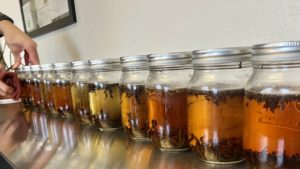
The bright red color of the infused tea indicates very concentrated nutrition, and the flavor is full-bodied but not heavy, with a pronounced sweetness on the aftertaste.
This cake yields a clear, bright red cup color with evenly-sized leaves. The flavor is soft and delicate, leaving a sweet taste on the back of your tongue and a long finish. Although this cake is relatively young, the earthy and woody flavors have mostly disappeared and the fruity, sweeter flavors have started to develop. This means that you can enjoy the puer now, or store it for later.